" height="28.235345940422295px" id="q9sQ2kzlE" transform="translate(0 0.38)" width="29.999999345730185px"/></svg>)

Turn everyday movement into visible financial progress.
WalkFund explores how small daily behaviors can create more engaging and sustainable saving habits in walkable cities.
• Led product strategy, UX, and visual design for a 0→1 concept
• Designed a savings system powered by everyday walking behavior
• Created mobile experience across tracking, saving, and rewarding
Role
Product Designer
Timeline
12 Weeks, 2025
Contribution
Prototyping, Interaction design, Usability testing, User research, Visual Design
Problem
Hard to save money for: Insurance? Travel goals? New products? ...
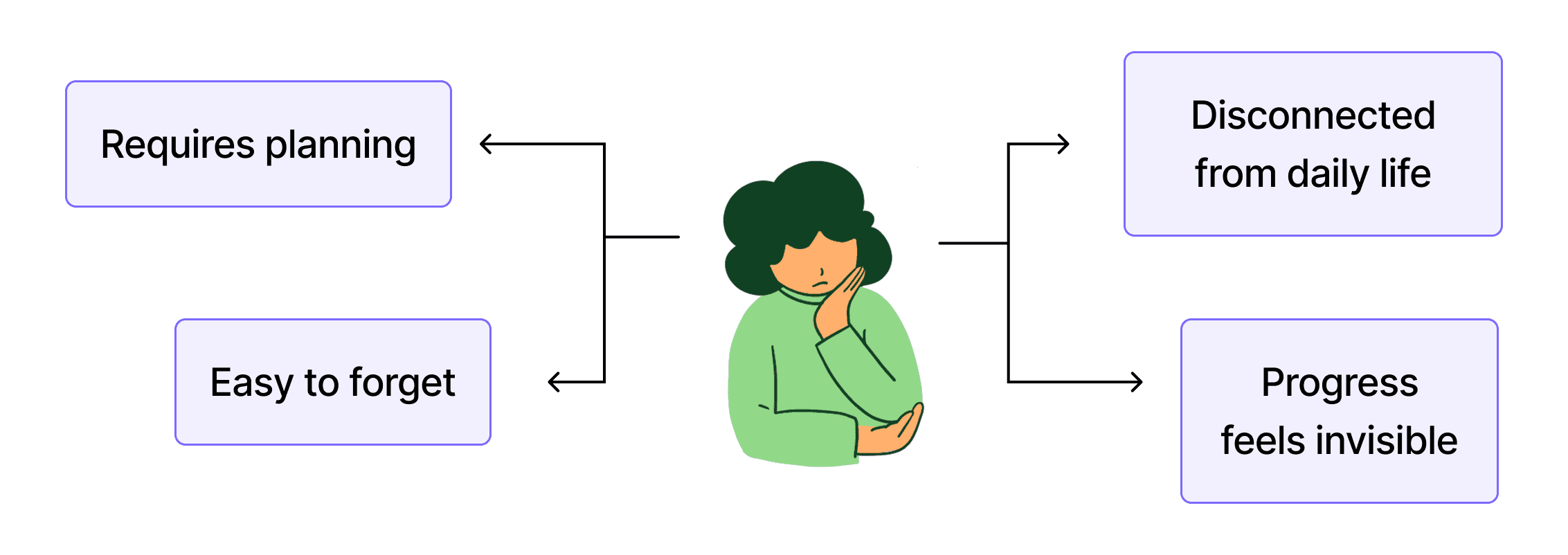
After online surveys, we found that:
Research
• People respond better to small, visible progress than to large financial goals.
• Saving feels easier when it becomes part of existing routines.
Market Observation
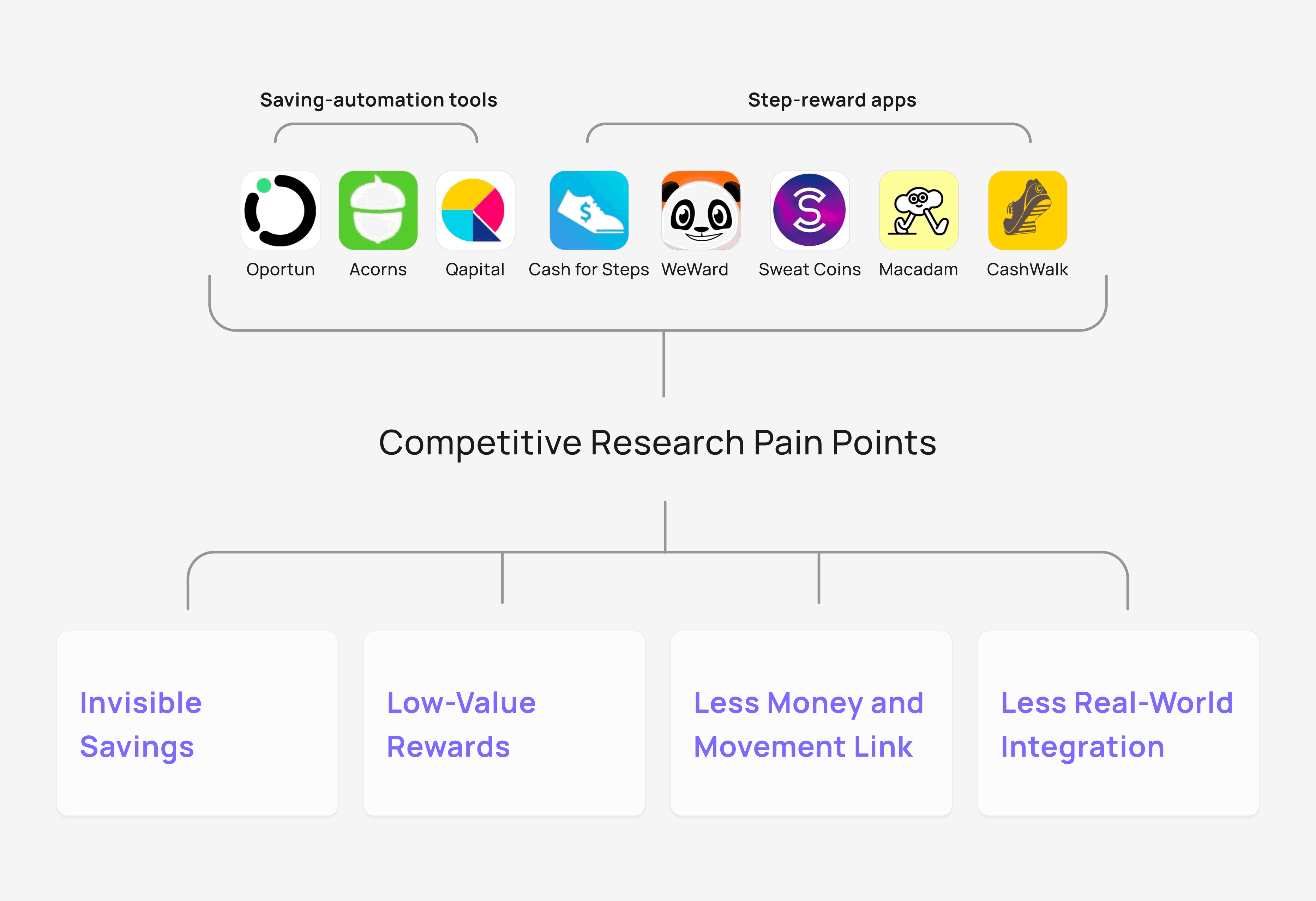
• Automatic saving is already a mainstream financial behavior.
• Walking reward apps (Sweat Coins) have attracted 150M+ users globally.
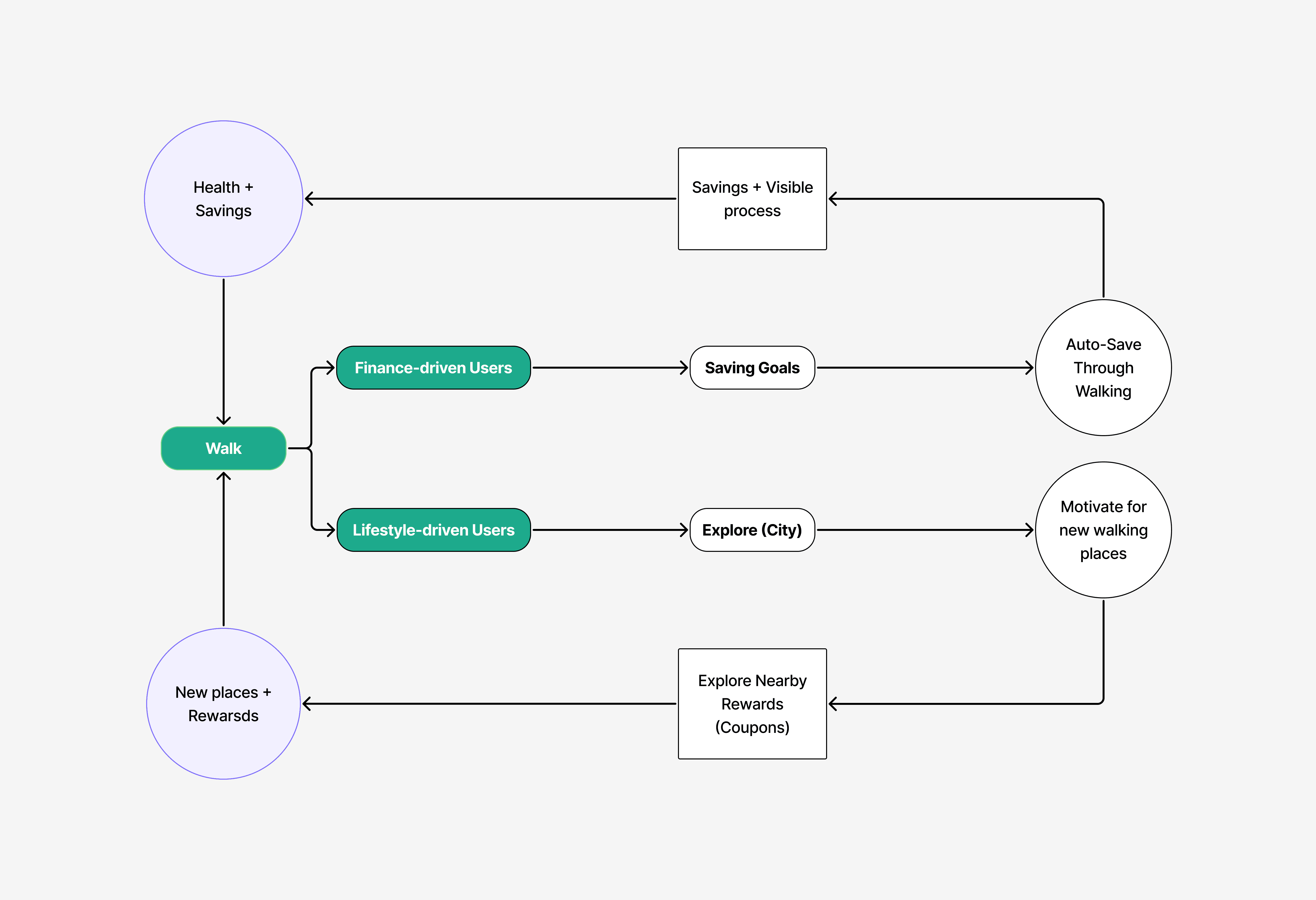
Walking =
Behavior + System + Rewards
WalkFund explores how saving behaviors can become easier to sustain when connected to actions users already perform naturally.
Why are 1,000 steps = $1?
Walkable city residents average ~1,300 more daily steps — Walking Insight Report in NYC, making 1,000 steps an achievable milestone for most users.
Starting at $1 makes progress easy to understand. (The savings rate is adjustable based on personal goals)
• Meaningful enough to create visible progress
• Flexible enough to scale from $1 to $10 per milestone
• Under 1,000 steps will automatically carry over to the next milestone
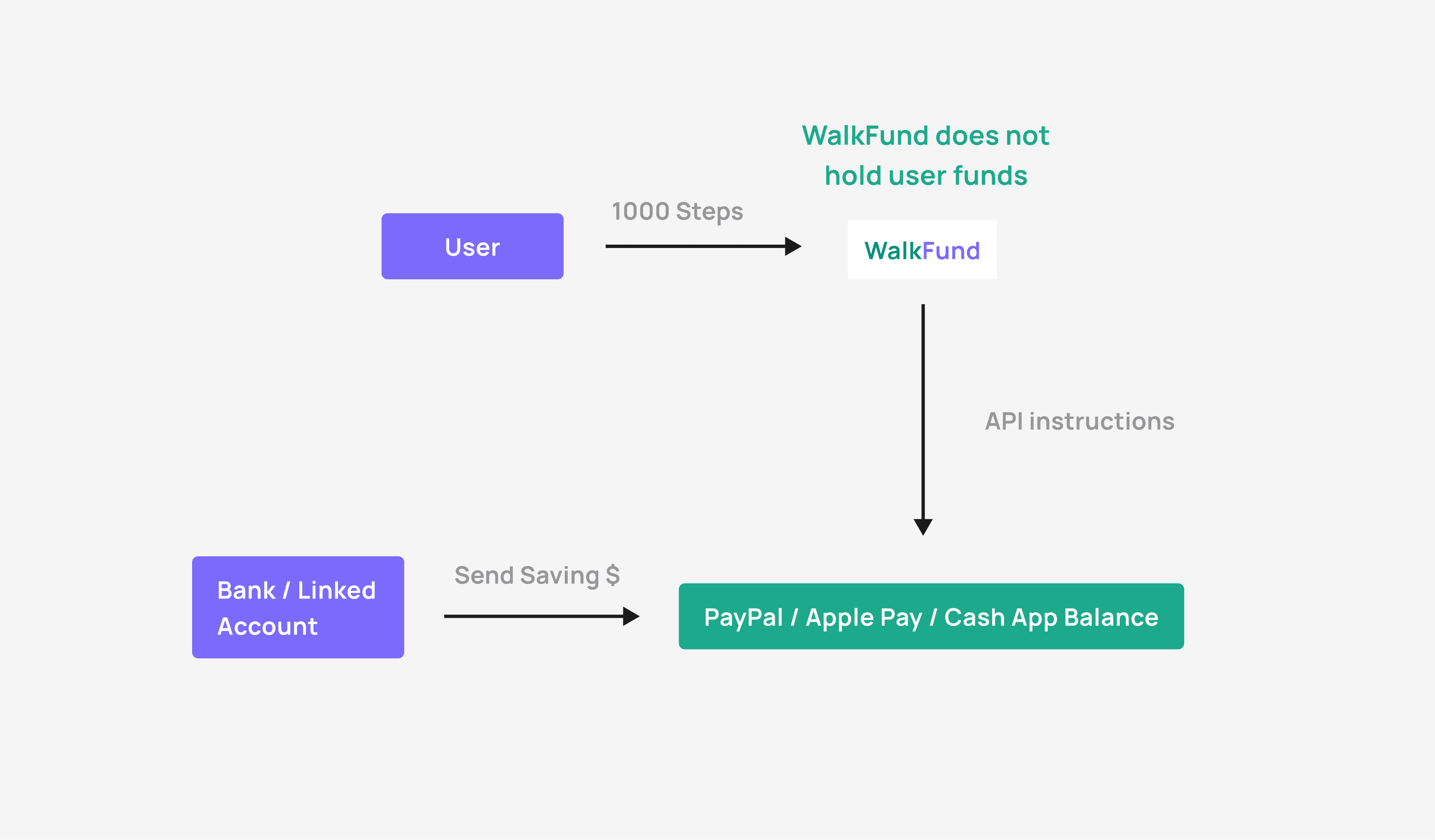
In interviews, users were cautious about the connection between money and bank accounts.
So, WalkFund relies on trusted systems like Apple Pay, Cash App, or PayPal to reduce adoption friction.
• No need for WalkFund to store or manage user balances
• Reduces perceived financial risk during onboarding

Core Product Features
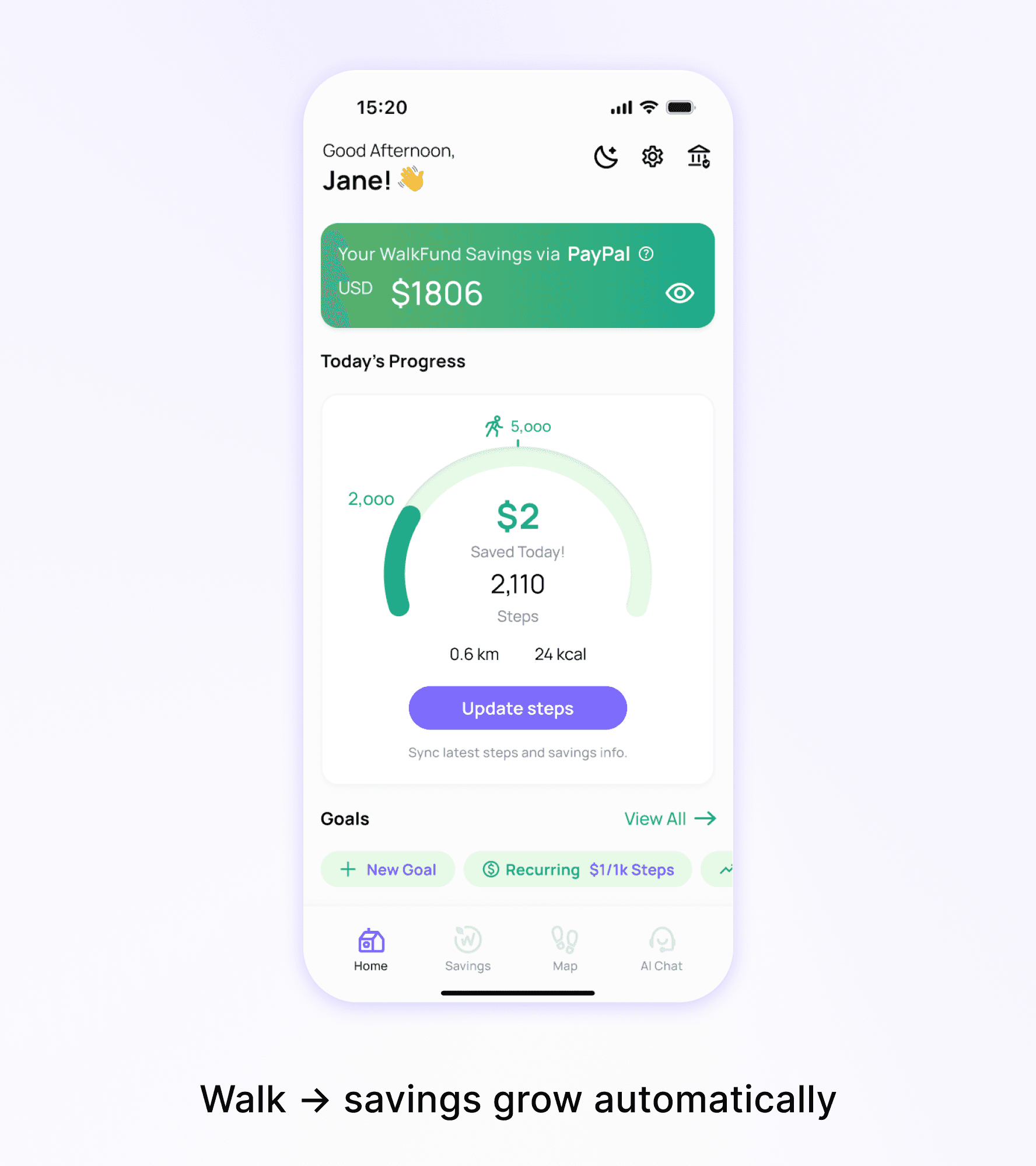
Every step triggers saving
• 1000 steps = $1 saved (Adjustable)
• Automatic transfer
(Apple Pay/PayPal/Cash App)
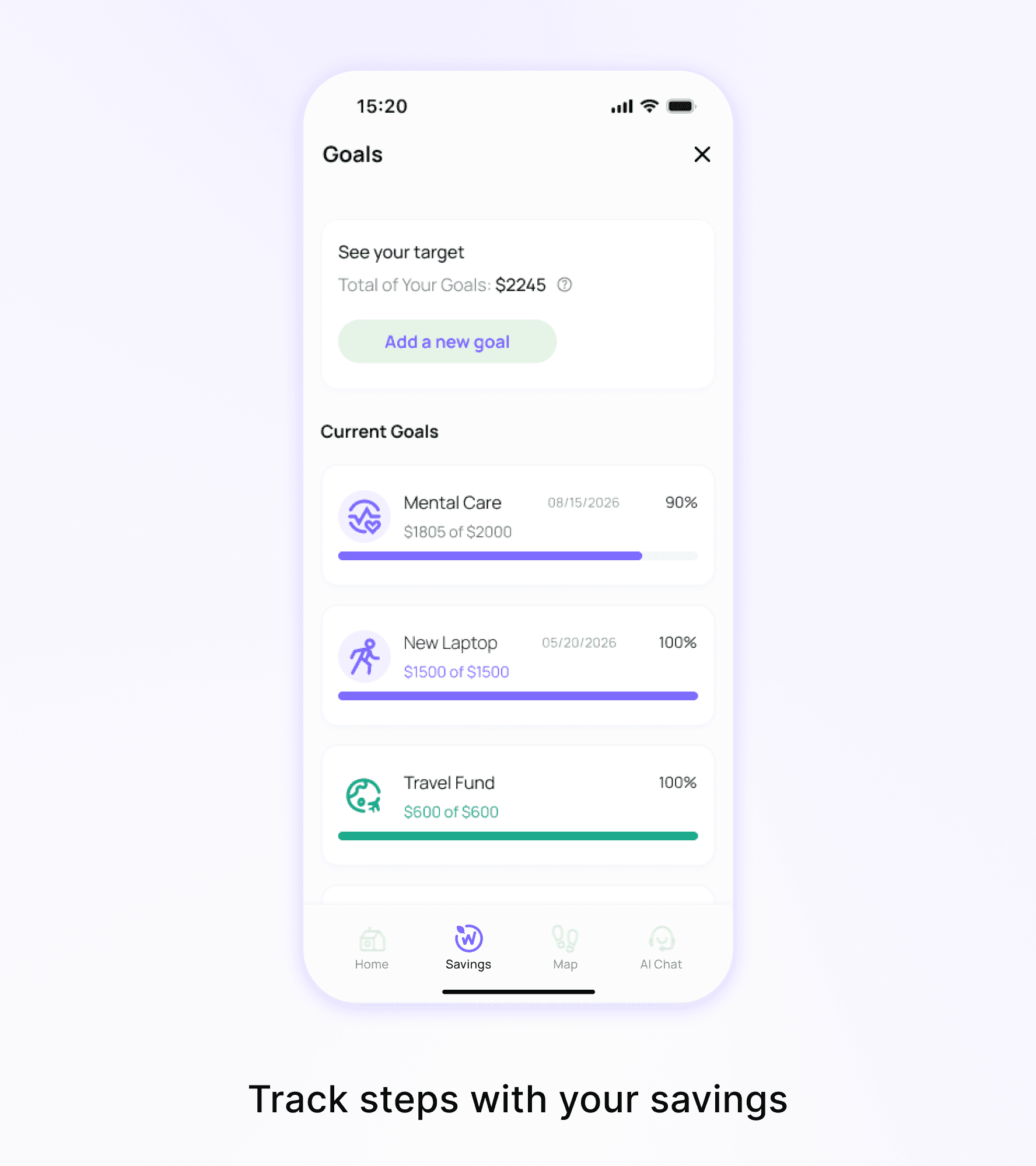
A four-step setup. Saving becomes visible and emotional.
• Goal-based saving
• Progress feedback
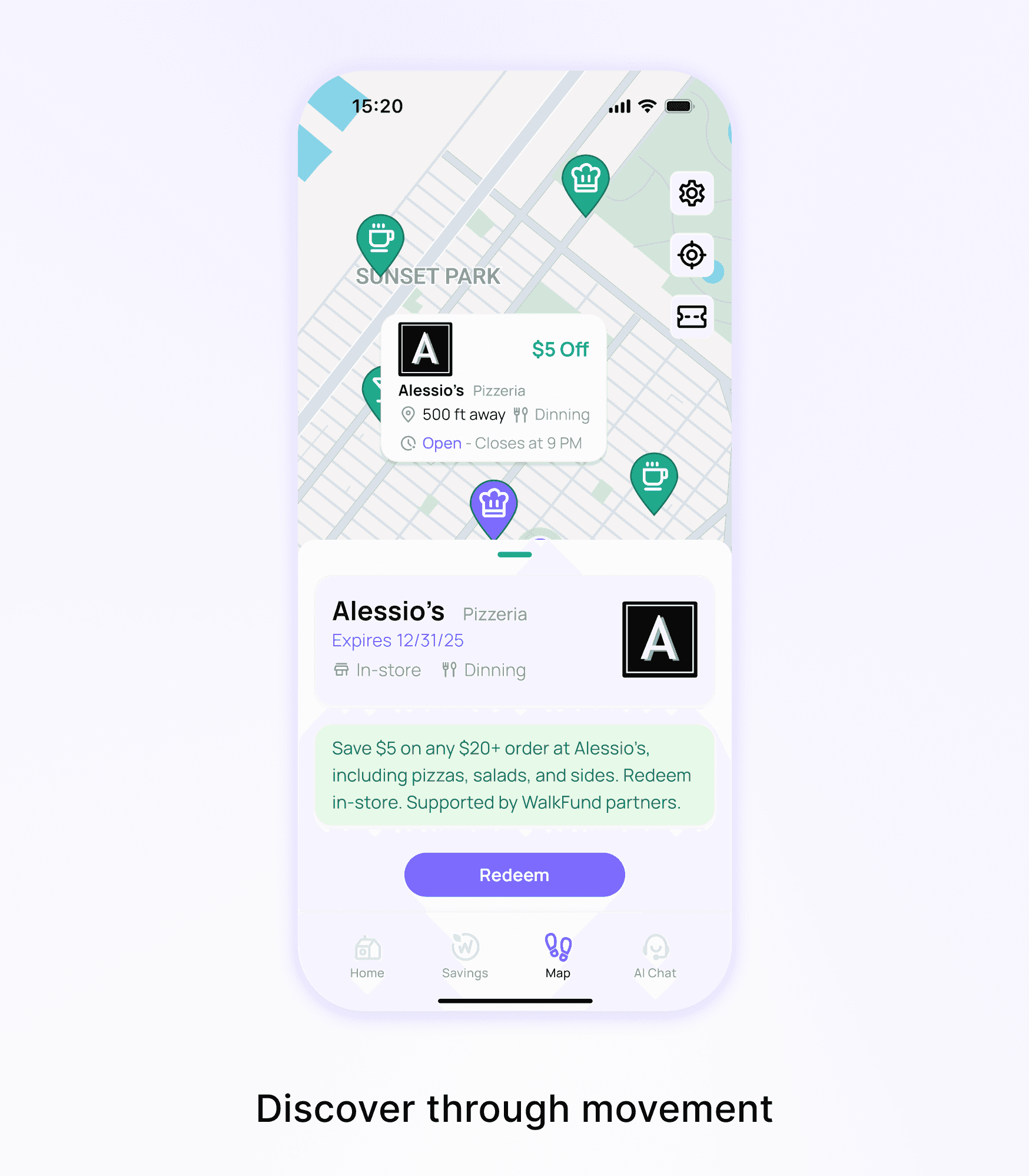
Walk and explore. Connect life with the
local community.
• Rewards (local partners)
• Neighborhood exploration
Micro-Interactions
Night Mood
Completion
AI Chat
Testing
Since one constraint on user adoption is the close link with money, our primary goal was to test whether users could understand the product and explain its value.
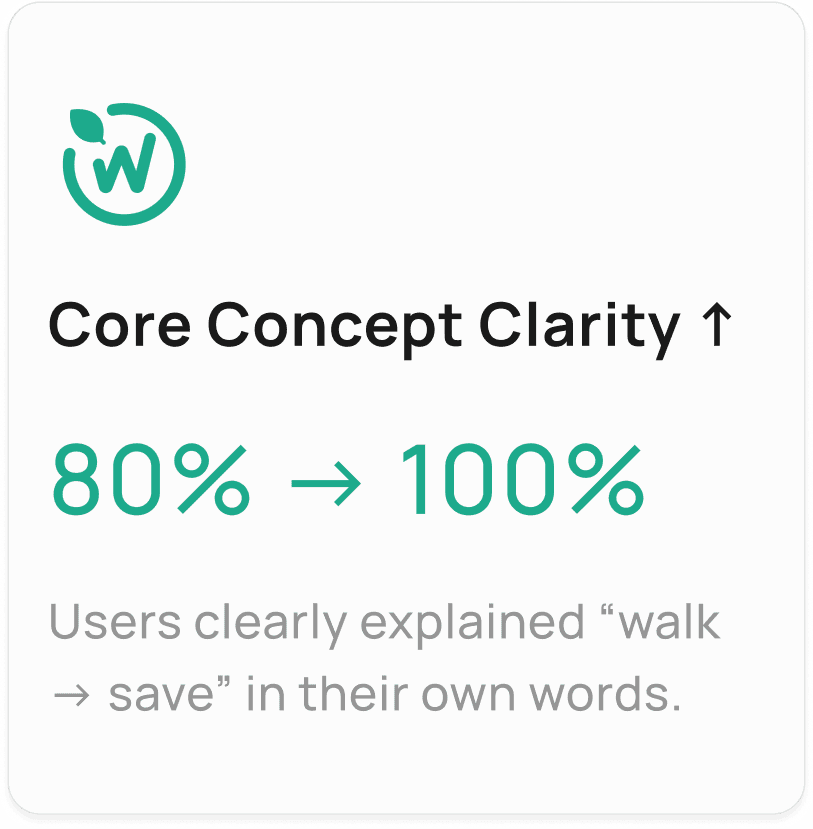
Users understood WalkFund as a way to turn walking into savings, and goals made that progress visible.

Challenge
Users struggled to find and start a saving goal.
• Prioritized goal creation as the foundation of the experience.
• Reduced task time from 74s to 15s.

Outcomes
WalkFund demonstrates how everyday habits like walking can support sustainable saving habits.
• Goal setup felt more connected to everyday life.
• Visible progress increased saving motivation.
• Users understood the walk-to-save concept immediately.


Imapct
By turning walking into a trigger for saving, the concept could help urban professionals build healthier lifestyles and stronger financial habits.
Reflection
Friction wasn’t a setback. It was the signal.
Early tests revealed friction and confusion, which helped us shape each iteration’s direction. This project reinforced a core point: clarity, simplicity, and a focus on key behaviors matter more than adding complexity.

Read More
I designed a scalable WalkFund iconography system that translates user behaviors, financial actions, and daily activities into clear visual cues, balancing recognition, consistency, and personality across the WalkFund experience.